Federal Body Armor Law
18 U.S.C. § 931, enhanced sentencing, and what the federal government actually prohibits
Reviewed by Ethan Harper · Last updated March 2026
The James Guelff and Chris McCurley Body Armor Act (2002)
The primary federal statute governing body armor is 18 U.S.C. § 931, enacted in 2002 as part of the James Guelff and Chris McCurley Body Armor Act. The law was named after two police officers killed in separate incidents by suspects wearing body armor. The act created a single, clear federal prohibition: it is unlawful for any person who has been convicted of a crime of violence (as defined in 18 U.S.C. § 16) to purchase, own, or possess body armor.
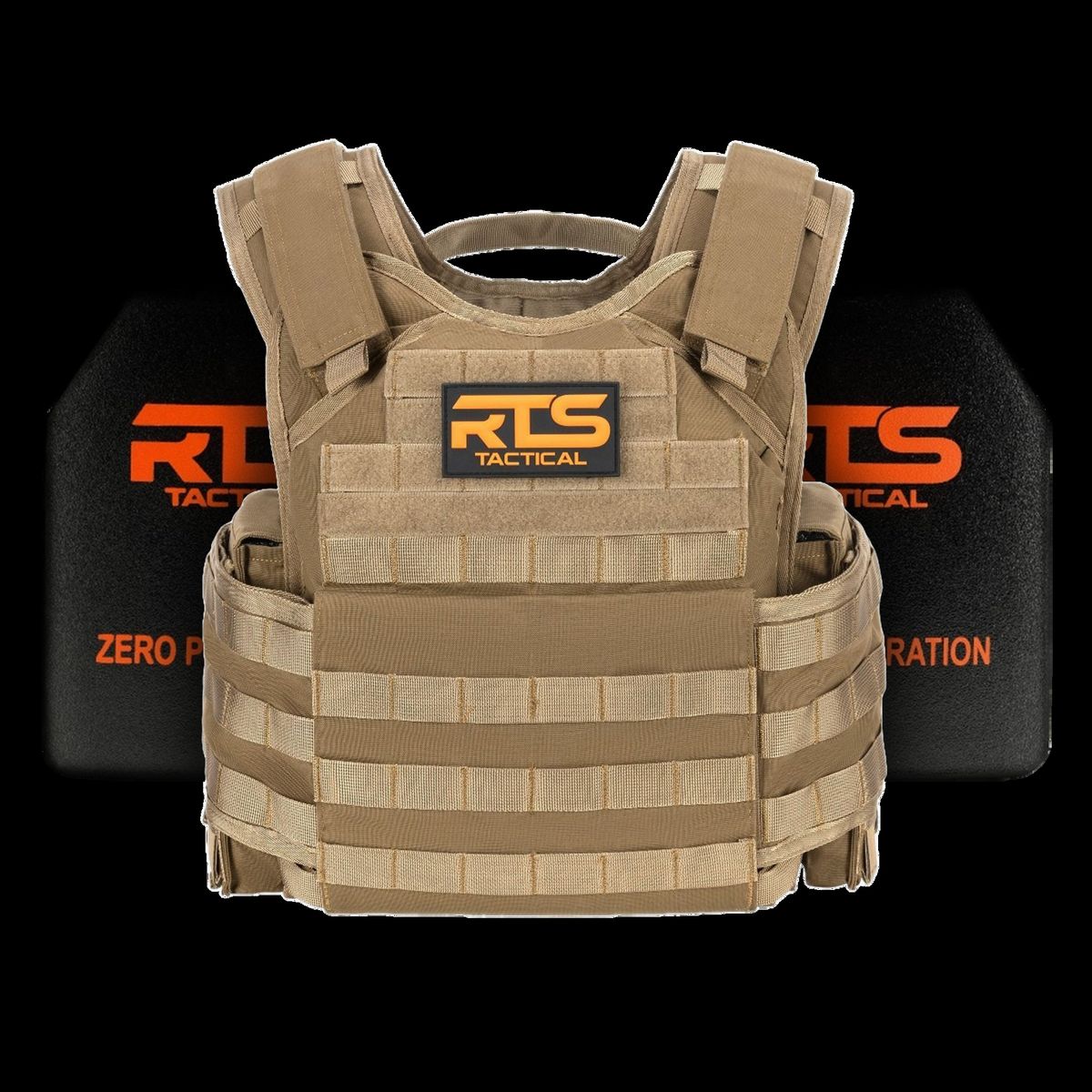
The term "body armor" under the statute means "any product sold or offered for sale, in interstate or foreign commerce, as personal protective body covering intended to protect against gunfire." This definition is broad enough to cover soft armor (Kevlar vests), hard armor (ceramic or steel plates), and plate carriers with ballistic inserts.
The penalty for a convicted violent felon found in possession of body armor is up to three years in federal prison. This is a standalone offense — the person does not need to be committing another crime at the time of possession.
The Felon Exemption Process
The law does include a narrow exemption. A convicted felon may petition the head of a federal law enforcement agency (such as the Director of the ATF or FBI) for a waiver if the body armor is necessary for their livelihood. For example, a person convicted of a violent felony who works as a security guard or armored car driver may be able to obtain a waiver. In practice, these waivers are rarely granted and the process is not well-publicized.
The employer must certify that the body armor is necessary for the person's employment, and the agency head must determine that the circumstances justify the waiver. There is no formal appeals process if the waiver is denied.
Enhanced Sentencing: 18 U.S.C. § 924(a)
Separate from the possession prohibition, federal law provides for enhanced sentencing when body armor is used during the commission of a crime. Under the Armed Career Criminal Act and related provisions, wearing body armor during a federal crime of violence or a federal drug trafficking crime can add additional years to a sentence.
The logic behind enhanced sentencing is that a person who wears body armor while committing a crime has demonstrated premeditation and an intent to resist law enforcement, making them more dangerous. Several federal circuits have upheld these enhancements, and they are frequently applied in cases involving bank robbery, drug trafficking, and organized crime.
Military and Export Controls (ITAR)
Body armor rated at NIJ Level III and above (capable of stopping rifle rounds) is classified as a defense article under the International Traffic in Arms Regulations (ITAR), administered by the State Department's Directorate of Defense Trade Controls (DDTC). This means that exporting body armor outside the United States requires a license, and violations can result in severe criminal and civil penalties.
For domestic civilian purchase, ITAR does not restrict ownership. However, it does mean that body armor manufacturers and dealers who export must be registered with DDTC and comply with export licensing requirements. Some manufacturers voluntarily restrict sales to certain countries or to verified law enforcement and military customers for liability reasons.
What Federal Law Does Not Restrict
It is important to understand what federal law does not prohibit:
- Civilian purchase: There is no federal law preventing a non-felon civilian from purchasing any level of body armor, including Level IV rifle-rated plates.
- Online sales: Federal law does not restrict online sales of body armor. Any restrictions on online sales come from state law.
- Age restrictions: There is no federal minimum age to purchase body armor. State laws may impose age limits.
- Wearing in public: There is no federal law against wearing body armor in public. Some states and localities have restrictions.
- Type restrictions: Federal law does not ban any specific type, level, or material of body armor for civilian ownership.
This means that the vast majority of body armor regulation happens at the state level, creating a patchwork of rules that varies significantly across the country. See the full state-by-state purchase restrictions →
Proposed Federal Legislation
Several bills have been introduced in Congress to expand federal body armor restrictions, though none have passed as of March 2026:
- Aaron Salter Jr. Responsible Body Armor Possession Act: Introduced in 2022 and reintroduced in subsequent sessions, this bill would ban civilian purchase of Level III and above body armor (rifle-rated). Named after a retired police officer killed in the 2022 Buffalo mass shooting, where the shooter wore body armor.
- Body Armor Tax Act: Proposed adding a significant excise tax to body armor sales to discourage civilian purchase.
- Various state-level federal preemption bills: Some legislators have proposed federal preemption of state body armor laws, which would create a uniform national standard.
None of these proposals have gained sufficient support to pass both chambers, and the political dynamics around body armor legislation remain complex — with Second Amendment advocates arguing that defensive equipment should not be restricted, and gun control advocates pointing to incidents where body armor was used by mass shooters.