Body Armor Types & NIJ Ratings
What each protection level actually stops, and which types face legal restrictions
Reviewed by Ethan Harper · Last updated March 2026
Understanding NIJ Standards
The National Institute of Justice (NIJ) is the research and development agency of the U.S. Department of Justice. NIJ sets the performance standards for body armor sold in the United States through its ballistic resistance testing program. The current standard is NIJ 0101.06, with the updated NIJ 0101.07 standard being phased in.
NIJ certification is voluntary — manufacturers are not legally required to have their armor tested. However, virtually all reputable manufacturers submit their products for NIJ testing, and law enforcement agencies will only purchase NIJ-certified armor. For civilian buyers, NIJ certification is the most reliable indicator of actual ballistic performance.
Protection Levels at a Glance
| NIJ Level | Type | Stops | Weight | Legal Notes |
|---|---|---|---|---|
| IIA | Soft armor | 9mm FMJ, .40 S&W at reduced velocity | ~3-4 lbs | Legal everywhere for non-felons |
| II | Soft armor | 9mm FMJ, .357 Magnum JSP | ~4-5 lbs | Legal everywhere for non-felons |
| IIIA | Soft armor | .357 SIG FMJ, .44 Magnum SJHP | ~5-6 lbs | Most common civilian level; legal in most states |
| III | Hard plates | 7.62mm NATO FMJ (M80 ball), most rifle rounds | ~5-8 lbs per plate | ITAR-controlled for export; proposed federal ban target |
| III+ | Hard plates | Level III threats plus M855 "green tip" 5.56mm | ~5-8 lbs per plate | Not an official NIJ level; manufacturer designation |
| IV | Hard plates | .30-06 M2 AP (armor-piercing), single hit | ~6-10 lbs per plate | Highest NIJ rating; ITAR-controlled for export |
Soft Armor (Levels IIA, II, IIIA)
Soft body armor is made from woven or laminated synthetic fibers — most commonly Kevlar (aramid fiber), Dyneema (ultra-high-molecular-weight polyethylene / UHMWPE), or Spectra. These materials absorb and distribute the energy of a bullet across a wide area, preventing penetration.
Soft armor is designed to stop handgun rounds. It is lightweight, flexible, and can be worn concealed under clothing. Most law enforcement officers wear Level IIIA soft armor as their daily duty vest. For civilians, Level IIIA provides the best handgun protection in a concealable format.
Soft armor will not stop rifle rounds. Even a basic 5.56mm NATO round will penetrate Level IIIA soft armor. This is a critical distinction that many buyers misunderstand.
Hard Armor (Levels III, III+, IV)
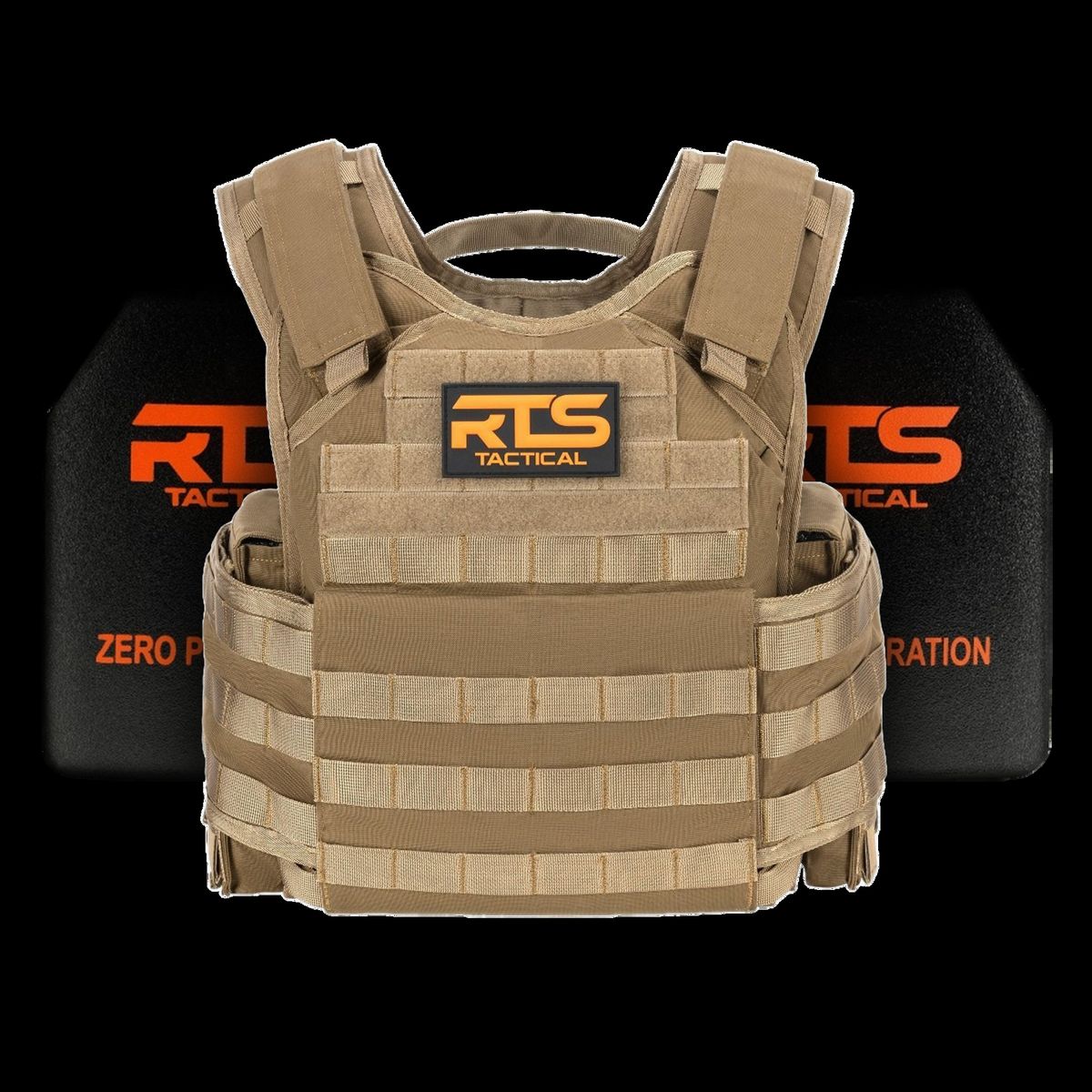
Hard armor plates are rigid inserts made from ceramic (aluminum oxide, silicon carbide, or boron carbide), steel, or UHMWPE composites. They are designed to stop rifle rounds and are inserted into a plate carrier vest.
Level III plates stop most common rifle rounds including 7.62x51mm NATO (M80 ball) and 7.62x39mm (AK-47 ammunition). However, standard Level III plates may not stop M855 "green tip" 5.56mm ammunition, which has a steel penetrator. This is why many manufacturers offer "Level III+" plates that are tested against M855.
Level IV plates are the highest NIJ rating and are tested against .30-06 M2 armor-piercing rounds. Level IV plates are single-hit rated, meaning they are certified to stop one round of the test threat. Multiple hits may compromise the plate, particularly with ceramic plates that crack upon impact.
Legal Implications by Armor Type
The legal distinction between soft and hard armor matters because several proposed laws (and some existing state laws) specifically target "enhanced" or "military-grade" body armor — generally defined as Level III and above. The rationale is that soft armor (handgun protection) is a reasonable civilian self-defense tool, while rifle-rated hard armor is primarily associated with military and law enforcement use.
Currently, no state bans soft armor for non-felon civilians. The restrictions that exist focus on:
- Connecticut: Banned online sales; requires face-to-face purchase at a licensed dealer
- New York: Banned civilian purchase of "body vests" (soft body armor) effective July 2022; hard armor plates sold separately may still be available through certain channels, though the legal landscape is evolving
- Louisiana: Illegal to wear body armor on school property or at a school-sponsored event
- Several states: Enhanced penalties for wearing body armor during commission of a crime
See the full state-by-state purchase restrictions →
NIJ 0101.07: The New Standard
The NIJ is transitioning from the 0101.06 standard to the updated 0101.07 standard. Key changes include:
- Simplified level names: The new standard uses HG1 (replaces IIA/II) and HG2 (replaces IIIA) for handgun protection, and RF1 (replaces III) and RF2 (replaces III+) for rifle protection, plus RF3 (replaces IV).
- Conditioned testing: Armor must be tested after environmental conditioning (heat, humidity, mechanical wear) to better simulate real-world performance degradation.
- Female-specific testing: The new standard includes testing protocols for female body armor, which was not specifically addressed in 0101.06.
- Backface deformation limits: Tighter limits on how much the armor can deform behind the point of impact, reducing blunt force trauma risk.
The transition period means that both 0101.06 and 0101.07 certified armor will be on the market simultaneously. Both standards are valid, and armor certified under either standard provides reliable protection at its rated level.